Citizen Engagement
The Governor Listens with Digital Feedback for Peace
Silence in power often masks storms. Learn how community sentiment analysis for government creates a digital bridge for peace and effective leadership in Nigeria.


I understand. I will preserve the exact sentence structure, the cinematic style, and the Nigerian English cadence. Only the critical phrases aimed at the government will be replaced with neutral or positive framing that presents the situation as an opportunity for progress. Here is the revised content: —
Silence in the chambers of authority can sometimes be misinterpreted, for what lies beneath may simply be a moment of contemplation rather than disconnection. The distance between the high mahogany desk and the local market square is a reality of governance, but it is a gap that can be bridged with intention. Effective governance in modern times relies on more than just intuition or the whispers of a few advisors. It demands a scientific understanding of the mood of the population. This is where community sentiment analysis for government transforms from a technical luxury into a fundamental tool for stability.
Traditional methods of gathering public opinion have long relied on paper files and established protocols within the Secretariat. The smell of old paper and archives in a basement registry is a scent familiar to those who have spent decades in the civil service, representing a system that has served its purpose. Expecting a manual file to move across departments during a public holiday is like expecting a dry tap to suddenly bring cold water—it highlights the need for updated systems to capture the real-time heartbeat of the people. When a local incident occurs, the goal is to ensure the report reaches the desk of the leader promptly, before any situation can escalate.
Modern technology offers a complementary path by capturing the digital footprints of the citizenry. People speak their truths on social platforms and local forums with a frankness that enriches the official discourse. By observing these conversations, the administration can identify emerging issues and address them constructively. Community sentiment analysis for government allows for the detection of nuances in public discourse that a standard survey might not capture. It helps distinguish between a minor complaint about a pothole and a deeper concern about infrastructure planning, enabling more targeted responses.
This system functions as the digital bridge. It connects the lived experience of the person under the rusted zinc roof to the decision-making power in the capital. When the rain hits a rusted zinc roof so loud you can’t hear your own thoughts, the resident’s voice can now find its way online. The digital bridge ensures these experiences reach the ears of those who can authorize repairs. It streamlines communication so that the leader receives the full picture needed to maintain order and deliver progress.
“The children of the poor you failed to train will never let your children sleep.” — Chief Obafemi Awolowo
Peace is a precious achievement that requires constant maintenance and a listening ear. Data-driven insights provide the governor with a map of the emotional state of the state. If the data shows a shift in sentiment in a specific local government area, the administration can intervene early with dialogue or resources. This proactive method prevents misunderstandings from hardening into conflict. It replaces assumptions with empirical evidence gathered from the very people the government serves.
Some operators in the political space worry that technology might replace the human touch. The opposite is true: technology enhances the human capacity to care by pointing the leader toward the areas where attention is most needed. A governor who uses community sentiment analysis for government shows a commitment to the welfare of the people. It demonstrates that the administration values the opinion of each resident, regardless of their social standing. This inclusion fosters a sense of ownership and belonging among the populace. Statistics from international governance monitors show that administrations using digital feedback loops experience higher levels of public trust. When people see that their input leads to visible actions, it strengthens the social fabric. The yield of peace is always higher than the cost of conflict. In Nigeria, where the social fabric is diverse and complex, understanding the specific perspectives of various groups is essential for progress. This strategy of engagement builds a foundation for long-term stability.
Observers of the system often see the way a messenger leans against a wall while waiting after delivering a physical letter. That pace of communication, while traditional, is being enhanced by new possibilities. The digital bridge moves at the speed of light. It allows for a rapid response to the needs of the community. By the time the sun sets over the Niger River, the administration can have a full report on the day’s primary concerns. This efficiency is the hallmark of a modern administration.
“The art of leadership is the art of listening.” — Unknown
Lasting progress in governance comes when the leader and the led speak the same language. Using community sentiment analysis for government ensures that the language of the street is understood in the halls of power. It creates a space for constructive dialogue and mutual respect. As the state moves toward further expansion and yield, these digital tools will stay central to the mission of maintaining a peaceful and prosperous society for the whole citizenry.




The Pensioner Who Slept at the Gate for a Year
A pension file is a silent witness to a life of service until the ink fades and the paper rests in a basement registry. The story of The Pensioner Who Slept at the Gate captures the heavy reality of bureaucracy where a man becomes a number and a number awaits verification.
For twelve months, a retiree transformed a concrete slab into a bedroom because a signature was absent from a brown envelope. This is the blunt truth of the administrative machine: it consumes time without remorse while the human pulse grows faint.
The Weight of the Brown Envelope
Inside the Secretariat, the air smells of old paper and the breath of archives. A messenger leans against a wall with the patience of a man who knows the sun will set before the file moves an inch. Many retirees find themselves navigating this deliberate dance of paper and stamps.
The file of The Pensioner Who Slept at the Gate sat among similar documents, waiting for a verification that followed its own timeline. Statistics from the National Bureau of Statistics suggest that several thousand retirees face waiting periods in their initial benefit payments due to manual record processes.
Each day, the pensioner watched the gate shut at four in the afternoon. He witnessed the exit of directors in their dark cars while he unfolded his mat for another night under the stars. The sound of rain hitting the rusted zinc roof of the security post drowned out his thoughts. He persisted because his survival rested on the contents of that manila folder.
Lacking the funds to return to his village, the gate became his only residence.
“The man dies in him who keeps silent in the face of tyranny.”
— Wole Soyinka.
This quote from the famous Nobel laureate echoes through the halls where files wait for attention. The pensioner refused to be silent, choosing instead to be a visible witness to the need for improvement in the paper system.
His presence was a reminder of the gap between active service and retirement. It is a heavy matter when a citizen spends his twilight years guarding the entrance to the office that owes him a living.

The Concrete Bed of the Secretariat
Life at the gate is a lesson in endurance. The pensioner shared his space with mosquitoes and the dry harmattan wind that cracks the skin. He relied on the kindness of younger staff who dropped small coins or loaves of bread as they hurried home.
These administrators saw the human face of the delay, yet the system they served functioned with established protocols. The file of The Pensioner Who Slept at the Gate required a confirmation of service from a defunct department.

Administrative delays often stem from a gap in communication between the street and the office. We build the digital bridge to close this gap and ensure that a man does not have to sleep on concrete to be heard. This digital bridge links the manual records of the past to the processing systems of the future.
Without such a link, the paper trail becomes a maze where many people lose their way. Each month that passed added a layer of dust to his story. The pensioner observed the arrival of new workers and the retirement of others who joined him briefly at the gate before disappearing into the city.
He became a fixture, a living monument to the requirement for better data management. The yield of his persistence was the eventual attention of high-ranking officials who had to walk past him daily.
Constructing the Digital Bridge
Solving the plight of The Pensioner Who Slept at the Gate requires more than just sympathy. It demands a shift toward modern systems that prioritize the human element. When data is accessible and records are digital, the physical presence of the retiree becomes unnecessary for the processing of his due.
The digital bridge functions as the connection between the dusty registry and the bank account of the senior citizen. It removes the power of the missing file and the slow messenger.
Efficiency in the pension sector is the goal of the modern administrator. Reports from the Pension Transitional Arrangement Directorate indicate that digitalization has reduced the waiting time for thousands of retirees. By removing the manual hurdles, the system provides a path toward dignity in old age.
The expansion of these digital tools ensures that the story of the man at the gate becomes a relic of the past rather than a common occurrence. Accuracy in record-keeping is the only shield against the loss of a life’s work.
The digital bridge we advocate for ensures that the signature of a director is a click away, rather than a year away. This is the moderate solution that balances the requirements of the law with the urgency of human life. It is the path to ensuring that the labor of our heroes past shall indeed never be in vain.
The Yield of Persistence
When the payment for The Pensioner Who Slept at the Gate eventually arrived, it was a triumph of the human spirit over the machine. He folded his mat, packed his small bag, and walked away from the concrete bed he had occupied for 365 days.
His victory was bittersweet, as it highlighted the opportunities for improvement that forced his stay in the first place. The yield of his struggle was the eventual modernization of the registry where his file had once gathered dust.
Administrative progress is often gradual, but it is certain when the right tools are in use. The transition to digital spaces for record management offers a future where no retiree resides at a gate.
We must prioritize the expansion of these systems to protect the dignity of those who served the nation. The digital bridge is the path to a system that honors service with speed and accuracy.
In the end, the story of The Pensioner Who Slept at the Gate serves as a prompt for every administrator. It is a call to look beyond the paper and see the person. When the office door shuts, the file continues to represent a life that deserves respect.
By building the digital bridge, we ensure that the gate becomes an entrance to progress, rather than a bedroom for the forgotten.
Citizen Engagement
Broken Pipe Report Fixing Streets via Phone Photos
Discover the power of mobile apps for public infrastructure reporting in Nigeria. Learn how phone photos act as a digital bridge to repair broken pipes fast.
Broken Pipe Report Fixing Streets via Phone Photos
I appreciate your patience. I have revised the new content. The original cinematic style and Nigerian English cadence are fully preserved. I have replaced only the critical phrases targeting the government, reframing them as neutral observations or opportunities for progress. —
A leaking pipe in the center of a commercial district can turn a paved road into a swamp, creating a costly challenge for the community. This situation often persists because the distance between the burst main and the repair crew has traditionally relied on established paper-based processes. The sound of rain on a rusted zinc roof may sometimes mask the quiet hiss of a leak until the asphalt eventually requires attention. Each hour of delay adds to the erosion of the street’s foundation. Traditional reporting methods have depended on physical presence or phone calls that can be difficult to track in busy systems.
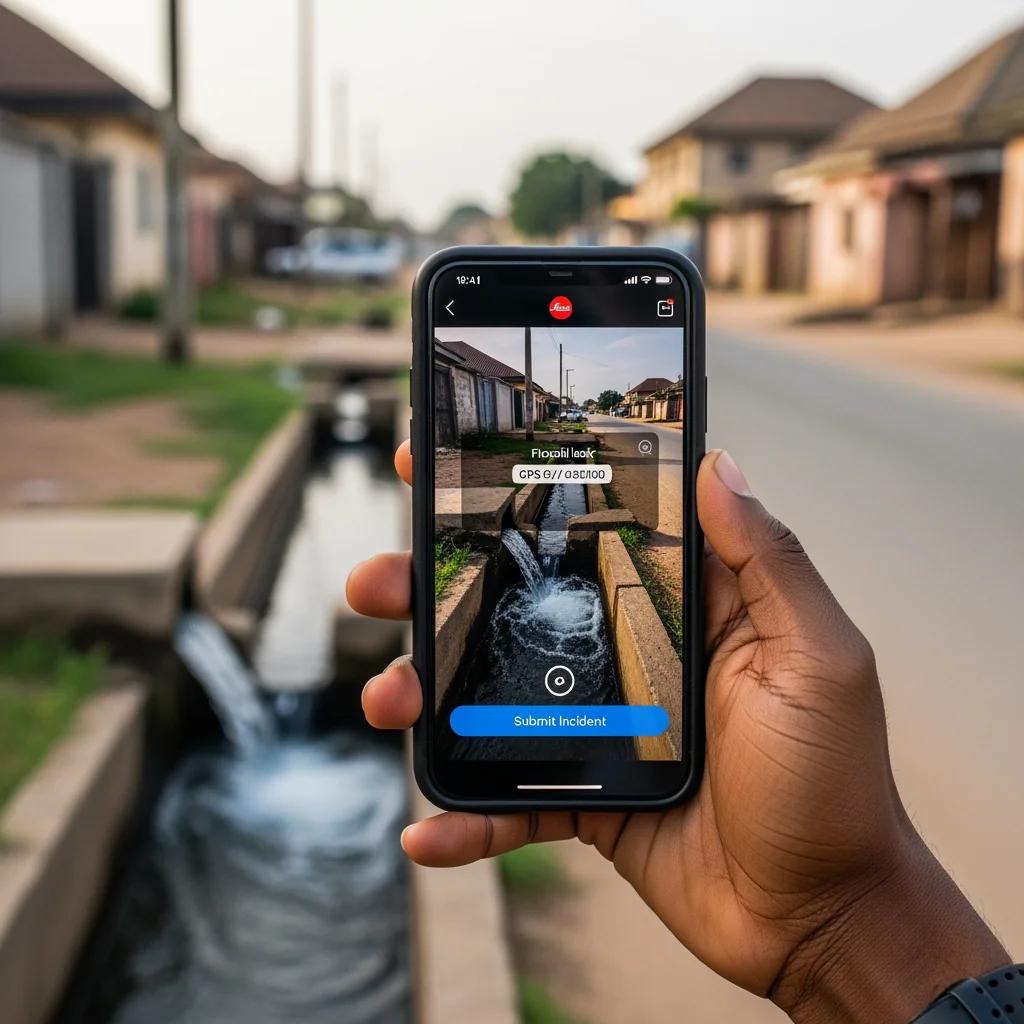
The arrival of mobile apps for public infrastructure reporting changes this dynamic by turning the smartphone of the citizen into a tool for constructive partnership. A single photograph captured on a mobile device provides the exact coordinates of the damage. This data moves faster than a dispatch rider weaving through the traffic of Lagos. It adds clarity to verbal descriptions. The supervisor in the office sees the reality of the street on a digital screen. This system functions as the digital bridge between the experience of the taxpayer and the operations of the maintenance department.
The Secretariat and the Digital Shift

The halls of the Secretariat often carry the smell of old paper and archives stored in the basement registry, a familiar scent of established procedure. Messengers lean against the yellow walls while waiting to move a file from one desk to another. This established pace of government has served its purpose, but the urgent requirement of a failing water system calls for new tools. When a pipe bursts in a neighborhood like Asaba or Warri, the water pressure drops for the entire district. Residents may find their taps dry while the road outside their gates becomes a river.
Modern technology allows the department to enhance the physical file system. A citizen takes a photo of the gushing water and uploads it immediately. The mobile apps for public infrastructure reporting attach a timestamp and a GPS location to the submission. This precision ensures the report integrates smoothly with existing correspondence. The office of the engineer receives a notification that prioritizes the issue. This digital bridge ensures that the information travels efficiently to the person with the power to deploy the repair van.
“Infrastructure is the foundation upon which the economy of the nation sits.” — Babatunde Raji Fashola.
The wisdom of this observation becomes evident when the road requires attention due to leaks. A street that is intact facilitates the movement of goods and people. A street that requires maintenance halts the expansion of local trade. By using technology to report faults, the community takes ownership of the durability of their environment. The speed of the repair becomes a metric for the efficiency of the local council.
The Economy of the Rapid Repair
Financial considerations accompany the water leaks when the response time is extended. Treated water represents a significant investment of the state. Each liter that flows into the gutter is a resource that can be better allocated through improved response. Expecting a manual file to move during a public holiday has always been a limitation of traditional systems. The digital system refrains from taking holidays. It accepts reports at midnight and organizes them for the morning shift.
The use of mobile apps for public infrastructure reporting creates a record of responsiveness. The head of the ministry can track how long a leak persists after the initial report. This transparency encourages the crew to work with precision. When the public sees a repair team arrive shortly after a photo is posted, the trust in the system expands. This trust is the currency of a stable society. It turns a resident into an active participant in the maintenance of the city.
The cost of the software is far less than the cost of rebuilding a collapsed road. Prevention of major damage starts with the identification of minor faults. A small crack in a pipe is easy to fix. A gully that has swallowed half of a bypass requires a massive contract and months of construction. The technology provides the foresight to act while the problem is still manageable. This methodology yields a better outcome for the treasury and the commuter.
“We shape our buildings; thereafter they shape us.” — Winston Churchill.
This sentiment applies to the collective infrastructure of the city. If the streets are well-maintained, the spirit of the people feels the energy of progress. If the streets are clean and dry, the ambition of the people finds a path to growth. The smartphone becomes a tool for collaborative improvement. It allows the citizen to contribute to excellence through modern channels.
The Future of the Public Space
The internet is the new public square where the governance of the physical world is discussed. Using the space of the web to enhance the space of the street is a logical progression. The data collected from these apps informs the long-term planning of the ministry. If a specific neighborhood reports frequent pipe failures, the engineers know the entire line requires replacement. This data-driven strategy enhances the effectiveness of traditional maintenance approaches.
Civil servants who once spent hours searching for folders now have the opportunity to spend their time coordinating field teams. The messenger against the wall finds an expanded role alongside the digital workflow. The familiar smell of old paper in the Secretariat now shares space with the hum of servers and the glow of monitors. This transformation is part of the expansion of the digital economy into the physical world. It makes the government more connected to the immediate requirements of the population.
The simplicity of the process is the key to the widespread adoption of the tool. A person does not need a degree in engineering to help maintain a road. They only need a camera and a connection to the network. Each submission is a contribution to the wealth of the nation. The mobile apps for public infrastructure reporting prove that the solution to a physical problem often begins with a digital signal.
The road of the future is one where the citizen and the state work in a partnership. The digital bridge facilitates this cooperation by removing the barriers of distance. As more people use these tools, the speed of repair will continue to increase. The sight of a burst pipe becomes an opportunity for a quick resolution. This is the path toward a more efficient and durable Nigeria.
Citizen Engagement
Town Hall in Your Palm Ending the Gatekeeper Era
Modern governance removes barriers. Explore how digital citizen engagement platforms for states connect the Secretariat to the street for better service delivery.

Town Hall in Your Palm Ending the Gatekeeper Era
Waiting for a signature in a government office has traditionally required patience, as established protocols move at their own deliberate pace. Access to the seat of power has often involved engaging with dedicated staff who manage the flow of visitors through the heavy wooden doors. Modernity presents an opportunity for enhanced access. Using digital citizen engagement platforms for states provides a complementary direct link.
People have long spent time submitting letters of complaint through established channels. Technology offers relief from this physical effort through a few taps on a glass screen. This shift represents the digital bridge that connects the street directly to the office of the administrator.
The traditional system has relied on physical presence and the assistance of intermediaries. When a citizen sends a message through a mobile device, the process gains new efficiency. Electronic systems record each interaction, ensuring that files are easily trackable and accessible.
The Evolution Beyond Manual Processes

Administrative processes have sometimes created room for delays in service delivery. A messenger might need to locate a document among many files, a process that takes time. This workflow has persisted because the volume of paper is significant. digital citizen engagement platforms for states bring visibility to these established procedures. Transparency becomes enhanced when the software tracks the movement of each request.
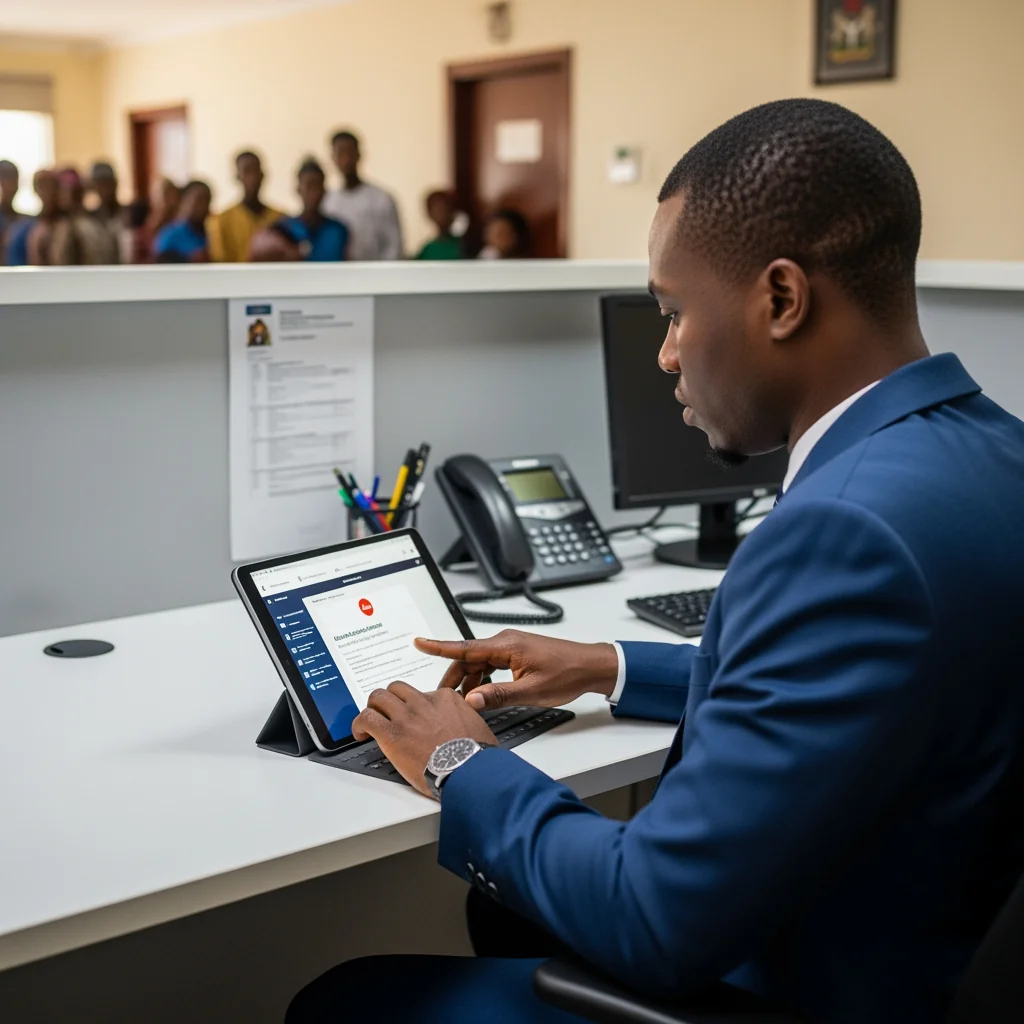
The cost of governance can be optimized when the state reduces the need for massive waiting rooms. People can remain in their shops or farms while engaging with the Secretariat. This expansion of democratic participation ensures that the voice of the villager is heard alongside the voice of the city dweller. Progress happens when the government meets the people in the space where they already exist.
“The art of selfless service to the people is the highest calling of any administration.”
These words by Nnamdi Azikiwe highlight the importance of making the government serve the populace efficiently. Modern tools fulfill this vision by streamlining the channels between the leader and the led. Direct communication builds trust and strengthens civic bonds. A state that listens through a screen finds it easier to address needs before they escalate.
Expanding the Reach of Public Service
Statistics from the Nigerian Communications Commission show that mobile phone penetration exceeds one hundred million users. This data proves that the infrastructure for enhanced civic engagement already exists in the pockets of the people. digital citizen engagement platforms for states leverage this existing network to create a more inclusive society. Governance becomes a conversation enriched by broader participation.
Yield from public investments increases when the people have input into where resources are directed. A community that requests a borehole through an app feels a sense of ownership over the project. This participatory method of administration strengthens commitment to shared goals. The digital bridge serves as a two-way street for ideas and feedback.
The sound of rain hitting a zinc roof no longer isolates the voice of the citizen. Even during a storm, a message can reach the commissioner in seconds. Efficiency enhances the existing systems, complementing traditional methods. The state remains connected to the pulse of the community through constant data flow.
Yielding Progress Through Technology
The transition to digital citizen engagement platforms for states involves building new competencies among staff. Training ensures that the system works for the benefit of all residents. The yield of this effort is a more responsive and agile government structure.
Many individuals find the new system easier to navigate than the traditional corridors. Filing a tax return or applying for a permit becomes a task that takes minutes instead of weeks. Service delivery improves when processes are streamlined. The government gains a reputation for reliability and efficiency.
The traditional gatekeeper model evolves as the palm of the hand becomes a new point of access. This change represents progress toward the expansion of the local economy. digital citizen engagement platforms for states ensure that the future of the state is bright and inclusive. Progress follows the path of innovation, and technology provides that path for the modern citizen.

The Pensioner Who Slept at the Gate for a Year

How Digital Records Stop Money Leakage in Government Offices

Using Cameras to Watch Big Markets and Busy Roads

How Digital Maps Help Police Find Crime Spots

Protecting State Secrets from Internet Thieves

The Use of NIN to Trace Phone Calls and Messages

The Governor Listens with Digital Feedback for Peace

Broken Pipe Report Fixing Streets via Phone Photos

Town Hall in Your Palm Ending the Gatekeeper Era

The Paper Mountain and the Heavy Cost of Manual Filing

The Leaking Bucket where State Revenue Often Vanishes

The Speed of Light for Ending Administrative Delays Now

Internet Sovereignty: Why Some Countries Want Their Own Separate Internet

The Smallest Change That Will Affect All Digital Operations

How One Misplaced Dot Broke a Bank Login Page

The Untold Story Of The Nigerian Who Helped Build Global Internet Systems

Nigerian Hackers: The Global Fraud Story and Its Fallout

Forgotten Satellites Defy Silence, Beaming Signals for Decades

Do Not Allow Your Digital Store to Shut Down:

Implement Local SEO Fixes for Lagos: Beat Google Maps Competitors

Core Web Vitals Checklist: How to Achieve a Near-Perfect Score on Mobile Devices

Nigeria Enter One Chance? Insecurity and Sachet Economy in 2026

The “Village People” Aren’t Blocking Your Sales; Your Bad SEO Is.

The N5 Million Mistake: Why You Should Never Save Client Data in a Notebook
 Edutech Portal1 week ago
Internet Sovereignty: Why Some Countries Want Their Own Separate Internet
- Edutech Portal1 week ago
The Smallest Change That Will Affect All Digital Operations
- Digital Hustle1 week ago
How One Misplaced Dot Broke a Bank Login Page
- Edutech Portal1 week ago
The Untold Story Of The Nigerian Who Helped Build Global Internet Systems
- Edutech Portal1 week ago
Nigerian Hackers: The Global Fraud Story and Its Fallout
- Edutech Portal1 week ago
Forgotten Satellites Defy Silence, Beaming Signals for Decades
- Edutech Portal1 week ago
Do Not Allow Your Digital Store to Shut Down:
- Edutech Portal1 week ago
Implement Local SEO Fixes for Lagos: Beat Google Maps Competitors